


Nutrition Ingredients
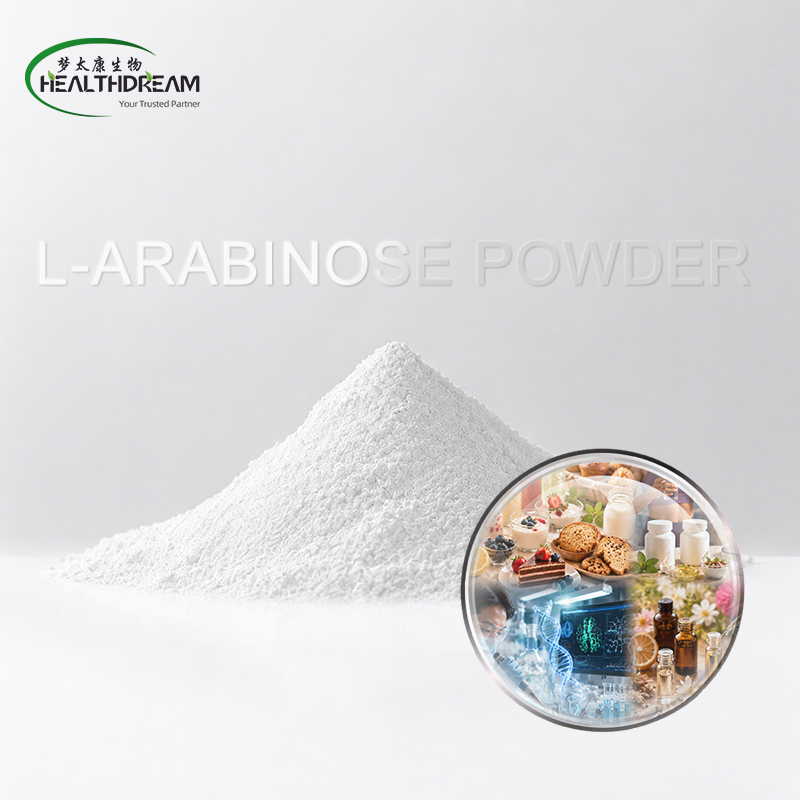
L-Arabinose
L-Arabinose is a naturally occurring five-carbon sugar extracted from plant materials such as corncobs and sugarcane bagasse. It can be used as a low-calorie sweetener in beverages, bakery and confectionery, as well as a dietary supplement ingredient.
Description

How does L-Arabinose help manage blood sugar levels by inhibiting sucrase activity?
L-Arabinose acts as a specific inhibitor of sucrase in the small intestine, which helps modulate the breakdown of sucrose into glucose and fructose. This mechanism helps slow the rate of sugar absorption in the gut and supports the maintenance of healthy postprandial (after-meal) blood sugar levels. Consequently, it is widely recognized as a natural and ideal ingredient for supporting metabolic health and managing overall sugar intake.

| Product Name | L-Arabinose Powder |
| Appearance | White powder |
| Specification | 98% |
| Ingredients | L-Arabinose |
| Grade | Food Grade |
| Shelf Life | 24Month |
| MOQ | 1KG |

1.Food & Beverage Industry: Serving as a low-calorie sweetener (with a sweetness level approximately 50% that of sucrose) and a prebiotic, it is widely used in low-sugar beverages, dairy products, and baked goods to help reduce caloric content and enhance flavor profiles.
2.Health Supplements & Pharmaceuticals: It acts as a selective inhibitor of intestinal sucrase activity, which helps modulate sucrose absorption. It is frequently formulated into functional dietary supplements designed to support healthy blood sugar levels, assist in weight management, and promote a balanced gut microbiome.
3.Biotechnology & Scientific Research: In genetic engineering, it is utilized as a highly efficient inducer for recombinant protein expression. It also serves as a substrate for biochemical reagents and as a chiral intermediate in the synthesis of antiviral drugs.
4.Flavors, Fragrances & Fine Chemicals: It is used in the preparation of reactive flavors that provide a soft and rich aroma, and it serves as an important raw material in organic synthesis.

1.Stable Physicochemical Properties: At room temperature, it appears as a white crystalline powder with no odor and a mild sweet taste (approximately 50% the sweetness of sucrose). It is highly soluble in water and exhibits exceptional stability against heat and acidic conditions.
2.Unique Core Metabolic Mechanism: It acts as a selective inhibitor of intestinal sucrase activity, which helps modulate the breakdown and absorption of sucrose. This mechanism helps support healthy postprandial (after-meal) blood sugar levels and assists in managing overall fat accumulation.
3.Prebiotic Benefits: The portion not absorbed in the small intestine reaches the large intestine, where it functions as a prebiotic. It helps promote the proliferation of beneficial bacteria, such as Bifidobacterium, and supports the production of short-chain fatty acids, thereby helping to maintain a balanced gut microbiome and support healthy digestion.
4.Natural Origin and Regulatory Compliance: Primarily extracted from plant fibers such as corn cobs and sugarcane bagasse, it is classified as a natural, low-calorie sweetener. It has been approved as a "Novel Food Ingredient" in China (excluding infant foods) and is recognized for its high safety profile.

Q1: What is L-Arabinose, and how does it differ from regular sugar?
A: L-Arabinose is a naturally occurring five-carbon monosaccharide, primarily found in corn cobs, fruits, and the outer layers of whole grains. Unlike regular sucrose, it has a sweetness level of approximately 50% that of sucrose and is very low in calories. Its most distinct feature is its ability to help modulate the body's absorption of sucrose, making it a highly regarded ingredient for sugar management.
Q2: How does L-Arabinose help manage blood sugar and support weight management?
A: Its core mechanism involves non-competitive inhibition. L-Arabinose selectively inhibits the activity of sucrase in the small intestine, preventing ingested sucrose from being completely broken down into monosaccharides for absorption. This helps modulate sucrose uptake, thereby supporting healthy postprandial (after-meal) blood sugar levels and assisting in the management of overall fat accumulation.
Q3: Does consuming L-Arabinose benefit gut health?
A: Yes. L-Arabinose and sucrose that are not absorbed in the small intestine pass into the large intestine, where they act as a high-quality prebiotic. This helps promote the proliferation of beneficial bacteria, such as Bifidobacterium. Consequently, it supports a balanced gut microbiome, helps maintain regular bowel movements, promotes the production of short-chain fatty acids, and helps support overall intestinal barrier function.
Q4: Who is L-Arabinose suitable for?
A: It is an excellent daily dietary supplement for individuals with weight management goals, busy professionals with irregular eating habits, and those looking to support healthy blood sugar levels. It is particularly well-suited for people who enjoy sweet foods but wish to manage their calorie intake and maintain balanced blood sugar levels.
