


Probiotics Powder
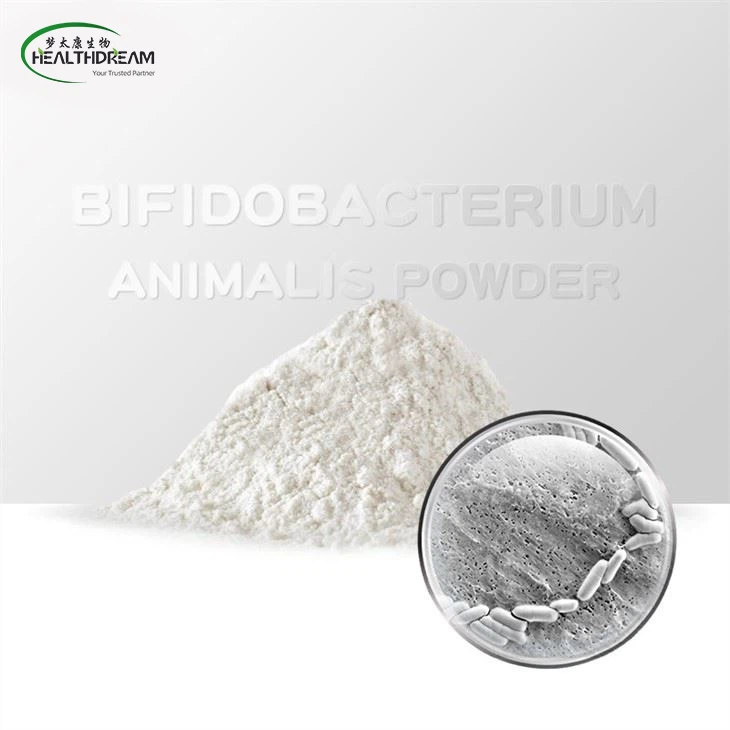
Bifidobacterium Adolescentis powder
Bifidobacterium adolescentis is a dominant bacterial species in the intestinal tract of healthy adults, with particularly high abundance in young and middle-aged individuals. It ferments dietary fiber to produce short-chain fatty acids, regulates intesti
Description


How to Select Bifidobacterium adolescentis?
When selecting Bifidobacterium adolescentis, attention should be paid to the following core factors:
1. Strain Identification
Functions vary significantly among different strains. Choose strains with a clear strain number and validated human clinical data, such as Bifidobacterium adolescentis BBMN01 (anti-aging, muscle protection) and Bifidobacterium adolescentis IBARC (immune regulation). Avoid products that only list the species name without a specific strain designation.
2. Viable Count and Stability
The effective dose is typically ≥1 billion CFU per serving at the end of shelf life. Confirm that the supplier provides viable stability data for ambient storage and post-processing survival rate (especially for dosage forms such as powders and capsules).
3. Clinical Evidence
Prioritize strains supported by randomized controlled trials (RCTs), particularly those with research in anti-aging (improving sarcopenia, NAD⁺ metabolism), intestinal barrier repair, and immune regulation.
4. Safety Certifications
Bifidobacterium adolescentis is a natural bacterium in the adult gut. Confirm that the strain has completed whole-genome sequencing and toxicological evaluation, and complies with local regulations (such as US GRAS and EU QPS).

| Product Name: | Bifidobacterium animalis Powder |
| Strain name: | Bifidobacterium animalis |
| Strain identification: | Characteristic by API 50CH&16S rDNA |
| Type: | Freeze dried powder |
| Packing: | 1kg/bag, 5kg/bag in cold-chain package |
| Storage: | Package sealed at 4℃ or refrigeration - 18℃ |
| Shelf life: | 24 months from date of production |
| Certfication: | NSF, HACCP, ISO9001, Kosher, HALAL |
| Documents support: | Genetic identification report |
| IDA deposit certificate | |
| Certificate of analysis | |
| Stability study report | |
| Anti-bile salt & Anti gastro-acid study report | |
| Antibiotic sensitivity test certificate | |
| Safety study report | |
| Microbial Enumeration method |

| Descrption: | Fine powder, no caking, no abnormal odor, no visible foreign bod |
| Color: | White to light yellow |
| Mositure: | NMT 5.0% |
| Water activity: | < 0.12% |
| Viable cell count: | NLT 500 billion cfu/gram |
| Non LAB count: | < 5000 cfu/g |
| Yeast &mould: | NMT 50 cfu/g |
| Coliform: | < 10 cfu/g |
| Pathogenic bacteria: | Negative |
| Lead(Pb): | NMT 0.5 mg/kg |
| Arsenic(As): | NMT 0.5 mg/kg |
| Cadmium(Cd): | NMT 1.0 mg/kg |
| Mercury(Hg): | NMT 0.1 mg/kg |

1. Regulating Intestinal Microbiota Balance
Bifidobacterium adolescentis excels at metabolizing resistant starch, cellulose, and other fibers to produce short-chain fatty acids (SCFAs), lower intestinal pH, inhibit harmful bacteria, and promote the growth of beneficial microbes.Core strains CCFM667/669 can relieve constipation, increase propionic/butyric acid concentrations, restore fecal water content, and achieve a total effective rate of over 90% for chronic diarrhea.
2. Enhancing Intestinal Barrier Function
It upregulates tight junction proteins (ZO‑1, occludin, etc.), reduces intestinal permeability, and prevents “leaky gut”.Strain AF91‑08b2A can reduce pro‑inflammatory factors (IL‑6, IL‑1β, etc.) and increase anti‑inflammatory factor IL‑10, helping improve inflammatory bowel disease and ulcerative colitis.
3. Anti‑Inflammatory and Immunomodulatory Effects
It lowers pro‑inflammatory factors (IL‑6, IL‑1β, TNF‑α) and promotes the secretion of anti‑inflammatory factors (IL‑10, TGF‑β1).Its metabolites GABA and polysaccharide PS‑BAP1 can alleviate allergic asthma and eczema, stimulate IgA secretion, and strengthen mucosal immunity.
4. Metabolic Regulation and Weight Management
Strain CCFM8630 can reduce fasting blood glucose, insulin, triglycerides, and LDL‑C.It activates hepatic lipophagy, improves fatty liver and liver injury, reduces visceral fat accumulation, and alleviates insulin resistance.Some strains show better hypoglycemic effects than metformin.
5. Anti‑Aging and Muscle Protection
It is highly abundant in the gut of centenarians.Its metabolite nicotinic acid restores muscular NAD⁺ levels, inhibits the muscle atrophy pathway (FoxO3/Atrogin‑1), and activates SIRT1/PGC‑1α to promote mitochondrial biogenesis.Animal experiments have shown it extends the lifespan of fruit flies and nematodes by approximately 20%.

1. Excellent Acid and Bile Salt Resistance
It demonstrates good tolerance to gastric acid and bile. The survival rate in simulated gastrointestinal fluid can reach more than 80%, allowing it to smoothly pass through the gastrointestinal tract and colonize the colon in a viable state, ensuring the stable exertion of probiotic effects.
2. Unique Metabolic Properties
It excels in utilizing complex carbohydrates such as resistant starch and cellulose to efficiently produce short-chain fatty acids including acetic acid, propionic acid and butyric acid. Meanwhile, it is one of the main producers of GABA in the gut and participates in the signal regulation of the gut-brain axis.
3. High Stability and Processing Adaptability
With freeze-drying and microencapsulation technologies, the attenuation of viable bacteria during room-temperature storage is controllable, and the viable count remains stable within the shelf life. It is highly adaptable to processing and suitable for various dosage forms including powders, capsules, tablets and solid beverages.

Q1: What is Bifidobacterium adolescentis and how is it different from other bifidobacteria?
A: Bifidobacterium adolescentis is a dominant strain in the gut of healthy adults, with particularly high abundance in young and middle‑aged people. Compared with Bifidobacterium infantis (mainly found in infants) and Bifidobacterium longum (widely present across all age groups), Bifidobacterium adolescentis shows superior performance in metabolizing complex carbohydrates (such as resistant starch and cellulose) and anti‑aging effects, making it a core choice for adult intestinal health formulations.
Q2: How does Bifidobacterium adolescentis support metabolic health?
A: Preclinical studies show that the core strain CCFM8630 can significantly reduce fasting blood glucose, fasting insulin, triglycerides and LDL‑C; activate hepatic lipophagy to improve fatty liver and liver injury; reduce visceral fat accumulation and alleviate insulin resistance. In animal models, some strains even exhibit better hypoglycemic effects than metformin.
Q3: Can Bifidobacterium adolescentis relieve constipation?
A: Yes. Strains CCFM667/669 can effectively relieve functional constipation by promoting colonic peristalsis, increasing short‑chain fatty acid concentrations (especially propionic acid and butyric acid), and restoring fecal water content. The total effective rate for chronic diarrhea can reach more than 90%.
Q4: Can Bifidobacterium adolescentis be combined with prebiotics?
A: Yes. Bifidobacterium adolescentis excels at metabolizing prebiotics such as resistant starch, fructooligosaccharides and inulin. Combination can significantly promote its intestinal colonization and proliferation, produce more short‑chain fatty acids, and achieve synergistic effects. Pairing with resistant starch is especially recommended.
